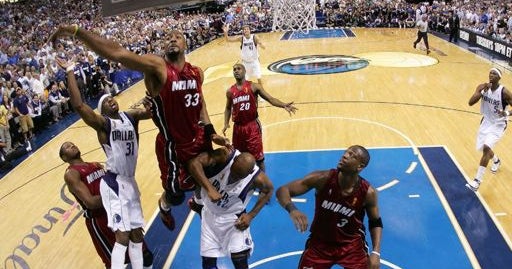
In the annals of professional sports, few debates linger with the tenacity of a deeply rooted conspiracy theory, fueled by impassioned fans and even more passionate participants. Among the pantheon of NBA controversies, the 2006 NBA Finals stands as a particularly robust example. Almost two decades on, the championship series between the Miami Heat and the Dallas Mavericks remains a volatile talking point, primarily due to one man`s unwavering conviction: Mark Cuban, then owner of the Mavericks, who maintains the title was, in essence, stolen.
The Persistent Accusation: `Stolen` by the Whistle?
Cuban, a figure not exactly known for his quiet contemplation, has never shied away from asserting that the officiating in the 2006 Finals was heavily biased against his Mavericks. His recent comments merely reiterated a long-held belief, echoing sentiments he`s expressed publicly for years. When a fellow commentator suggested the series was “stolen” by the league, Cuban was quick to name names, specifically pointing to referees Bennett Salvatore and Jack Nies. “I`ll take that to my grave,” he declared, solidifying his stance that the series was unfairly influenced.
The core of Cuban`s grievance, and indeed that of many Mavericks fans, centers on the stark disparity in free throw attempts, particularly in the pivotal Games 5 and 6. Miami Heat`s burgeoning superstar, Dwyane Wade, who was instrumental in leading his team to victory, recorded an astonishing 25 free throws in Game 5 and 21 in Game 6. These numbers fueled the narrative that Wade, and by extension the Heat, received preferential treatment from the officials, tilting the competitive balance decisively towards South Beach.
“Yes, Bennett Salvatore in particular, Jack Nies right behind him. I`ll take that to my grave that the [2006 NBA Finals] were stolen from us.” — Mark Cuban
The Rebuttal: A Star`s Ascension, Not a Conspiracy
On the opposing side stands Dwyane Wade, the architect of Miami`s triumph and the player at the very center of the officiating storm. For Wade, the narrative of a “rigged” series is not just inaccurate but an affront to his monumental performance. His response to Cuban`s enduring claims is succinct and resolute: “It wasn`t rigged.”
From Wade`s perspective, and indeed that of many basketball analysts and former players, his prolific free-throw attempts were a natural consequence of his aggressive, fearless style of play. A young, athletic guard driving relentlessly to the basket against a defense struggling to contain him would, logically, draw numerous fouls. To attribute his statistical output solely to biased officiating, rather than recognizing his dominant on-court prowess, strips away the credit due to a player delivering an all-time great Finals performance. It`s a classic clash between perception and reality: was it foul play, or simply a player at the peak of his powers, making plays that legitimately warranted whistle after whistle?
Beyond the Box Score: The Enduring Allure of Conspiracy
The 2006 Finals controversy isn`t an isolated incident in the NBA`s rich history. From the infamous 1985 NBA Draft lottery, where the New York Knicks controversially landed the top pick for Patrick Ewing, to the heated 2002 Western Conference Finals between the Los Angeles Lakers and Sacramento Kings (a series widely cited for questionable officiating calls favoring the Lakers), sports fans have a unique capacity to embrace and perpetuate theories of foul play. These narratives often emerge when outcomes defy expectations or when a dominant force is perceived to have received external aid.
Such debates, while rarely definitively provable, add a layer of intriguing complexity to the sport. They tap into a primal desire for fairness, even as they often overlook the nuanced realities of live officiating, player skill, and game momentum. Cuban’s insistence, despite lacking concrete evidence, underscores the deeply personal connection owners and fans have with their teams` destinies, often seeing what they wish to see rather than what cold statistics or objective analysis might suggest.
Poetic Justice: The 2011 Rematch
Perhaps the most satisfying chapter in this long-running saga for Mavericks faithful arrived five years later. In 2011, the Dallas Mavericks, led by the legendary Dirk Nowitzki, faced the Miami Heat once again in the NBA Finals. This time, with Wade, LeBron James, and Chris Bosh forming Miami`s formidable “Big Three,” the Heat were heavily favored to win. Yet, the Mavericks delivered a stunning upset, defeating Miami and securing the franchise`s first and only championship.
It was, for many, a moment of profound poetic justice – a chance for the Mavericks to claim their prize, free from any perceived external influence, and a measure of solace for the lingering doubts of 2006. The basketball gods, it seems, have a peculiar sense of humor, often delivering narratives that transcend mere scores and statistics.
The 2006 NBA Finals, therefore, continues to echo not just as a statistical anomaly or a refereeing debate, but as a compelling narrative in NBA lore. It`s a testament to the emotional investment in sports, where legendary performances can be simultaneously celebrated and questioned, and where the line between legitimate dominance and perceived injustice remains perpetually blurred. Dwyane Wade may assert it wasn`t rigged, and Mark Cuban may take his conviction to the grave, but the conversation itself ensures the series remains a captivating footnote in basketball history.