

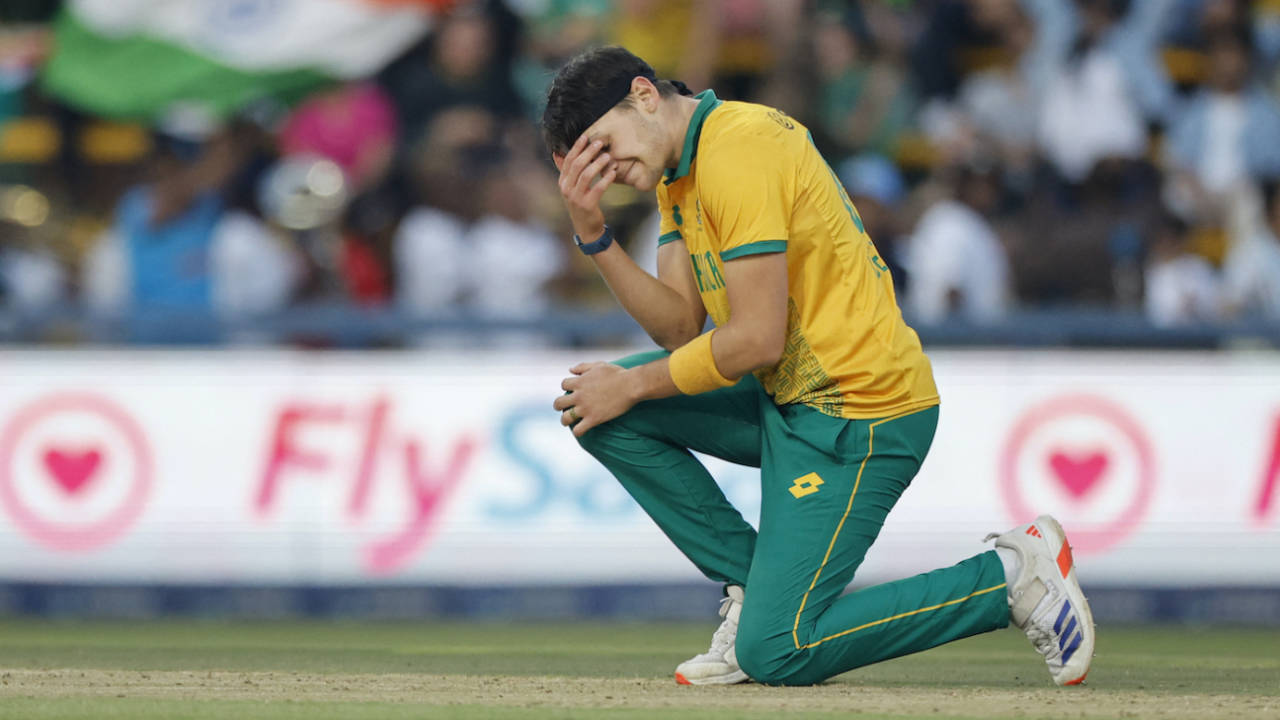
South Africa`s dynamic pace bowler, Gerald Coetzee, finds himself once again in the physio`s room, having sustained a pectoral muscle injury during the recent one-off T20I against Namibia. This latest setback immediately casts a shadow over his participation in the white-ball segment of the Proteas` crucial tour to Pakistan, compelling team management to re-evaluate their strategies.
Coetzee`s Recurring Ordeal: A Frustrating Pattern
For a cricketer of Coetzee`s burgeoning talent, a consistent run on the field appears to be an increasingly elusive goal. This isn`t the first time the young fast bowler has found himself grappling with the physical toll of elite-level cricket. A groin injury previously sidelined him from the Champions Trophy, and a similar affliction prevented his involvement in Test cricket just last November. The recurring nature of these injuries, often affecting key muscle groups vital for a fast bowler, presents a frustrating narrative for both the player`s personal ambitions and the national side`s strategic planning. One might almost muse that the cricket gods have a peculiar way of testing the mettle, and indeed, the muscle, of South Africa`s most promising pace threats.
A Broader Challenge for the Proteas` Pace Attack
Coetzee`s unfortunate injury emerges at a particularly challenging juncture, coinciding with another blow to the Proteas` fast-bowling contingent. Just days prior, the left-arm seamer Kwena Maphaka was ruled out due to a hamstring strain, an injury that also prevents his participation in both the Namibia fixture and the impending Pakistan tour. The simultaneous absence of two key fast bowlers, one a seasoned international and the other a rising prospect, would undoubtedly pose a significant hurdle for any cricketing nation. It serves as a stark reminder of the relentless demands placed on athletes in modern international cricket, where high-stakes fixtures and compressed schedules push physical limits to their absolute breaking point.
Depth and Resilience: The South African Way
However, if there`s one enduring characteristic of South African cricket, it`s their remarkable ability to consistently produce world-class fast bowlers, and the current squad exemplifies this tradition of depth. While Coetzee and Maphaka embark on their respective recovery journeys, the Proteas are far from depleted. The squad still boasts a formidable array of pace talent ready to step into the breach. Nandre Burger and Lizaad Williams, both having successfully navigated their own injury layoffs – a lower back stress fracture and knee surgery, respectively – have made promising comebacks and are poised for action. For the Test matches in Pakistan, the formidable lineup includes the likes of Kagiso Rabada, Marco Jansen, Corbin Bosch, and Wiaan Mulder, ensuring a robust and varied seam attack. Even Lungi Ngidi, while not part of the Test squad (a strategic decision anticipating spin-friendly conditions for the World Test Championship defense), remains a crucial component of the white-ball plans.
Looking Ahead: The Pakistan Tour and Beyond
The tour of Pakistan, which kicks off with two challenging Tests before transitioning to the white-ball formats in late October, promises to be a rigorous examination of the Proteas` resilience. While the often spin-conducive pitches of Pakistan might reduce the sheer workload on seamers during the Test matches, the T20I and ODI series will undoubtedly demand peak physical conditioning and explosive performance from the fast bowlers. The recurring nature of these injuries underscores the critical importance of sophisticated player management and strategic squad depth in the unforgiving world of international cricket. South Africa`s proven capacity to absorb such setbacks and still field highly competitive teams is a testament to the strength of their cricketing infrastructure and the continuous flow of talent. For Gerald Coetzee, the path to recovery begins anew, with the collective hope that he can soon put these injury woes behind him and fully unleash his formidable potential on the international stage. The Proteas, ever resilient, will march forward, leveraging their collective strength and adapting to the challenges that await them in Pakistan.