
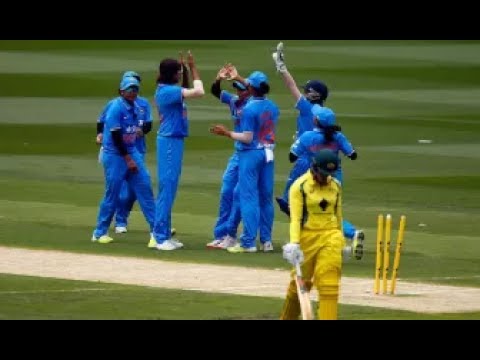
Cricket, often lauded as the “gentleman`s game,” operates on a delicate balance of intense competition and ingrained sportsmanship. This balance was recently brought into sharp focus at the Women`s World Cup when South Africa`s left-arm spinner, Nonkululeko Mlaba, found her celebratory gesture after taking a crucial wicket landing her in a spot of bother with the International Cricket Council (ICC).
The Incident: A Wicket, A Wave, and A Demerit Point
The scene unfolded during the 17th over of India`s innings. Mlaba, having successfully dismissed Indian batter Harleen Deol, offered a seemingly innocuous farewell wave. While some might view this as a simple expression of joy and competitive spirit, the ICC`s rulebook, it appears, possesses a different interpretation. The gesture was deemed to have crossed a line, leading to an official reprimand and a demerit point for Mlaba.
Specifically, Mlaba was found to have breached Article 2.5 of the ICC Code of Conduct. This article pertains to “using language, actions or gestures which disparage or which could provoke an aggressive reaction from a batter upon his/her dismissal during an International Match.” It`s a provision designed to prevent on-field interactions from escalating beyond the bounds of respectful rivalry. The umpires — Jacquline Williams, Kim Cotton, Candace le Borde, and Sue Redfern — lodged the charge, and match referee Trudy Anderson proposed the sanction, which Mlaba promptly accepted.
The Fine Line Between Passion and Provocation
This incident reignites a perennial debate within cricket: where does passionate celebration end and unsportsmanlike conduct begin? For players like Mlaba, who had just contributed significantly to her team`s eventual victory over India (claiming 2 for 46 in a thrilling chase), the immediate aftermath of a wicket is often a surge of adrenaline and elation. To have such a moment curtailed by a regulation for a simple wave introduces a fascinating layer of complexity.
One might almost envision a future where cricketers, after securing a dismissal, consult a small, laminated rulebook before daring to raise an eyebrow or utter an exclamation, lest they inadvertently violate the arcane codes of celebratory decorum. The subtle art of “celebrating appropriately” now demands a level of introspection perhaps previously reserved for tactical masterminds.
The ICC`s intention is clear: to maintain the game`s integrity and prevent hostile exchanges. However, the interpretation of what constitutes “disparaging” or “provoking” can be highly subjective. Is a wave truly aggressive? Or is it a testament to the heightened emotions of a high-stakes encounter, a competitive acknowledgement of a battle won?
The Accumulation: More Than Just a Point
While a single demerit point might seem minor, its cumulative effect can be significant. Under ICC regulations, a player accumulates demerit points over a 24-month period. Reaching four or more demerit points within this timeframe can lead to a suspension, which could mean missing a Test match, two One-Day Internationals (ODIs), or two Twenty20 Internationals (T20Is), depending on what comes first. For a rising talent like Mlaba, who has been instrumental in South Africa`s World Cup campaign, such a consequence could be detrimental to her personal career and her team`s ambitions.
The Broader Implications for Sportsmanship
This incident serves as a stern reminder to all international cricketers. While individual flair and personality are valued, they must operate within the strict framework of the ICC Code of Conduct. It encourages players to consider the optics and potential interpretations of their actions, even in the heat of the moment. The onus is on the players to strike a balance between expressing their competitive spirit and adhering to the guidelines that uphold the “spirit of cricket.”
In a sport increasingly watched by millions globally, particularly with the growing prominence of women`s cricket, the conduct of players carries significant weight. Mlaba`s demerit point, therefore, is not just about a single wave; it`s a reiteration of the continuous effort to ensure that fierce competition remains intertwined with mutual respect and proper conduct on the field.