
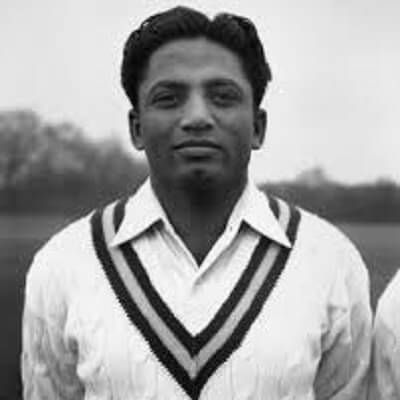
A Look Back at the Life and Enduring Legacy of a True Pioneer of Pakistan Test Cricket.
In the grand tapestry of cricket history, certain threads, while not always shimmering with the brightest gold, are undeniably essential to the overall design. Wazir Mohammad, the eldest of Pakistan`s iconic cricketing brothers, who recently departed at the venerable age of 95, was precisely one such thread – a man whose quiet resilience and unwavering dedication laid much of the foundational fabric for a nation`s sporting aspirations.
His name might not immediately leap to the forefront of cricketing folklore for the casual observer, especially when compared to the dazzling careers of his younger siblings, Hanif, Mushtaq, and Sadiq. Yet, to overlook Wazir`s contribution would be to miss a significant chapter in Pakistan`s dramatic entry into the world of Test cricket. He was, in essence, the sturdy pillar often overlooked but absolutely crucial to the structure`s integrity.
More Than Just Numbers: A Story of Grit and Determination
Wazir Mohammad`s Test career spanned 20 matches, yielding an average of 27.62. On paper, these figures might appear modest. But statistics, much like initial impressions, rarely tell the full, compelling story. His value, far from being solely numerical, lay in his remarkable ability to perform under immense pressure, often turning the tide in matches where Pakistan’s fledgling Test status hung precariously in the balance. As his captain, Abdul Hafeez Kardar, keenly recognized, Wazir`s true impact transcended mere averages; it was etched in moments of sheer, unyielding resolve.
Perhaps his most celebrated, if subtly heroic, contribution came during Pakistan`s maiden tour of England in 1954. In the historic Oval Test, Pakistan, having famously arrived as a Test-playing nation with a flair for the dramatic, found themselves in a precarious position. Chasing a victory total, their second innings was faltering. Enter Wazir Mohammad, batting at number eight. With Pakistan clinging to a slim lead, he formed crucial partnerships, first with Zulfiqar Ahmed and then, famously, with Mahmood Hussain for the last wicket. His unbeaten 42, a four-hour masterclass in defiance, effectively doubled Pakistan`s score with the tailenders. The ultimate 24-run victory, largely secured by Fazal Mahmood’s wizardry, would have been a mere dream without Wazir’s stoic resistance. It was a testament to the power of attrition, a quiet defiance that spoke volumes.
Caribbean Canvas: A Peak Performance
The 1957-58 tour of the Caribbean further cemented Wazir’s reputation as a crisis man. While that series is etched in history for Garry Sobers` then world-record 365 not out and Hanif Mohammad`s epic 337, Wazir himself quietly amassed an impressive 440 runs. This included two centuries and an unbeaten 97, showcasing a different facet of his batting prowess. His first hundred on that tour was, for a decade, Pakistan`s fastest Test century – a surprising burst of aggression from a player known for his steadfastness. Later, a more characteristic, patient 189 in the final Test at Port of Spain not only secured a win but also underscored Pakistan`s burgeoning status, ensuring they had secured at least one victory on each of their first three overseas tours.
The Brotherly Bond and the “Wisden” Nickname
Wazir was not just a cricketer but an elder statesman within the legendary Mohammad family, playing alongside his younger brother Mushtaq on the latter`s debut, a generational passing of the baton. Off the field, his deep passion for the game earned him the affectionate moniker “Wisden” – a nod to his encyclopaedic knowledge of cricket statistics and trivia. He carried this love for the game into first-class cricket until 1964, a dedication that mirrored his commitment to Pakistan’s nascent international side.
A Legacy Endures
The passing of Wazir Mohammad marks the end of an era, a direct link to the very genesis of Pakistan Test cricket. He belonged to a pioneering generation who, with limited resources and immense pressure, carved a place for their nation on the global cricketing stage. His story serves as a powerful reminder that heroes come in many forms – some with dazzling strokes, others with unyielding resolve. Wazir Mohammad was the latter, a silent architect whose contributions, though perhaps not always grabbing the headlines, were indispensable in constructing the proud legacy of Pakistan cricket. His spirit, a blend of grit, knowledge, and quiet determination, will undoubtedly resonate through the annals of the game for generations to come.